
The Future of European Injection Moulding: Bridging Market Demands with Sustainable Innovation
The European injection moulding market is set to reach USD 166.79 billion by 2033, driven by demand for high-tech, sustainable products. Facing high operational costs and labor shortages, manufacturers are prioritizing electrification and circularity. Key strategies include "Design-for-Recycling" and AI-driven "smart factory" solutions to improve efficiency. Notably, the MULTIMOLD project is advancing In-Mold Electronics (IME), which integrates electronics and graphics into a single moulding step. This "first-time-right" approach minimizes waste and energy usage, ensuring European manufacturers maintain global competitiveness despite regional challenges.
.png)
Navigating the Complexity of Modern Manufacturing
Modern manufacturing is defined by an intensifying tension: the demand for increasingly complex, high-tech products is rising just as the industry faces urgent mandates for circularity and higher production yields. For European manufacturers, this necessitates a transition beyond traditional methods toward integrated, "smart" solutions capable of embedding sophisticated electronics while adhering to stringent environmental regulations.The insights and statistical data presented in this report are derived from the Europe Injection Molded Plastics Market Size Report, 2033 and supporting European Union institutional data. These sources value the regional market at USD 116.28 billion in 2024, with a projected climb to USD 166.79 billion by 2033. To secure a position within this growth trajectory, industry stakeholders must navigate shifts in automotive electrification, regulatory pressures on single-use materials, and the technical breakthroughs, such as those pioneered by the MULTIMOLD project, that are currently reshaping the industrial landscape.
Automotive Electrification: The Primary Engine of Growth
The automotive segment remains the dominant force in the European injection moulding market, securing a 30.9% share in 2024. This leadership is dictated by "lightweighting" requirements; plastics currently account for 12–15% of an average vehicle's mass (approximately 150–200kg). As the European Commission mandates a 55% reduction in greenhouse gas emissions by 2030, reducing vehicle weight via engineered polymers has evolved from a design preference to a strategic necessity.Why the Shift to Electric Vehicles (EVs) Specifically Benefits Injection Moulding The proliferation of EVs accelerates the adoption of high-performance injection moulded parts, as these vehicles typically contain approximately 25kg more plastic than internal combustion engine (ICE) counterparts. This demand is concentrated in:
- Battery Enclosures: Precision-moulded module housings, busbars, and cell separators must meet exacting standards for flame retardancy and electrical insulation.
- Thermal Management: Components must withstand temperatures exceeding 150°C while maintaining micrometer-level tolerance.A capability unique to high-end moulding using advanced engineering plastics like polyphenylene sulfide and liquid crystal polymers.
The Sustainability Mandate: Beyond Single-Use Towards Circularity
European manufacturing is being fundamentally restructured by the Circular Plastics Alliance, which targets the use of 10 million tonnes of recycled plastics annually by 2025. This goal, combined with legislative bans on various single-use items, is driving a shift toward "Design-for-Recycling" (DfR) and the adoption of chemically recycled feedstocks.The "Game-Changer" Status of Chemical Recycling In high-performance sectors such as automotive and medical technology, chemical recycling (via pyrolysis or depolymerization) is a vital technological pivot.
Traditional mechanical recycling often degrades polymer chains, limiting their utility in precision engineering. Chemical recycling, however, yields virgin-equivalent feedstocks, allowing manufacturers to meet EU circularity targets without compromising mechanical or thermal integrity. Within this framework, innovative processes, such as MULTIMOLD’s dissolution-based recycling, are specifically targeting the "multi-material compounds" that have historically hindered circularity. By enabling the reuse of high-value materials like polycarbonate (PC), the industry can finally bridge the gap between high-performance requirements and environmental accountability.
The Human Capital Gap: Addressing the Skilled Labor Shortage
A critical bottleneck to European competitiveness is the scarcity of technical expertise. In 2024, over 40% of EU plastics processing firms reported significant difficulties in filling technical roles. This gap is exacerbated by a decade-long decline in polymer processing enrollment, occurring precisely as the industry’s demand for digital skills—including process simulation and Industry 4.0 integration—has reached an all-time high.
This labor shortage poses a severe risk to regional productivity. Investment in human capital is now as vital as investment in machinery; without a workforce proficient in operating advanced electric high-speed and multi-component systems, the "digital transition" remains out of reach for many. Consequently, reskilling the workforce is the only way to safeguard Europe's ability to innovate at the pace of global competitors.
Operational Realities: High Energy Costs and the Digital Pivot
European manufacturers operate under a heavy overhead burden. In 2024, industrial electricity prices in the EU averaged €0.20 per kWh—double the rates in the U.S. and four times those in China. Simultaneously, manufacturing wages continue to rise, with skilled technicians in hubs like Germany and Switzerland earning €40+ per hour.Smart Factory Solutions as a Survival Mechanism These economic pressures have transformed digitalization from a competitive advantage into a survival mechanism. This is particularly true for Small and Medium Enterprises (SMEs), where fewer than one-third currently possess the in-house expertise to fully implement Industry 4.0 solutions. To maintain margins against €0.20 per kWh energy costs, firms are pivoting toward:
- Process Simulation: Utilizing digital twins to predict outcomes and eliminate material waste before a single gram of resin is injected.
- Automation and Analytics: Implementing AI-based process optimization to ensure production is "first-time-right," thereby minimizing the energy-intensive costs associated with defects, rework, and scrap.
The MULTIMOLD Perspective: Engineering the Next Generation of IME
The MULTIMOLD project, funded by Horizon Europe, serves as a direct technical antidote to the energy and labor pressures facing the market. It focuses on revolutionizing In-Mold Electronics (IME): a process that creates 3D-shaped objects with seamlessly integrated graphics and electronics in a single step.Currently, the fabrication of complex electronic products involves multiple sub-processes. While many of these enjoy 99% yields, the critical overmolding sub-process is often capped at 85%, resulting in a total fabrication yield of no more than 80%. MULTIMOLD targets this 20% loss through a "first-time-right" methodology. Its versatility is demonstrated across three challenging use cases: Automotive HMIs (functional in humid conditions), Industrial control panels (with integrated haptic feedback), and Wind turbine condition monitoring (engineered to survive harsh conditions on the rotor blade
Key MULTIMOLD Innovations:
- Circular-by-Design IME: Products engineered for easy disassembly and high-quality recycling.
- Dissolution-Based Recycling: Utilizing hot-melt adhesives for embedding electronics, allowing for the efficient separation of components from plastic materials.
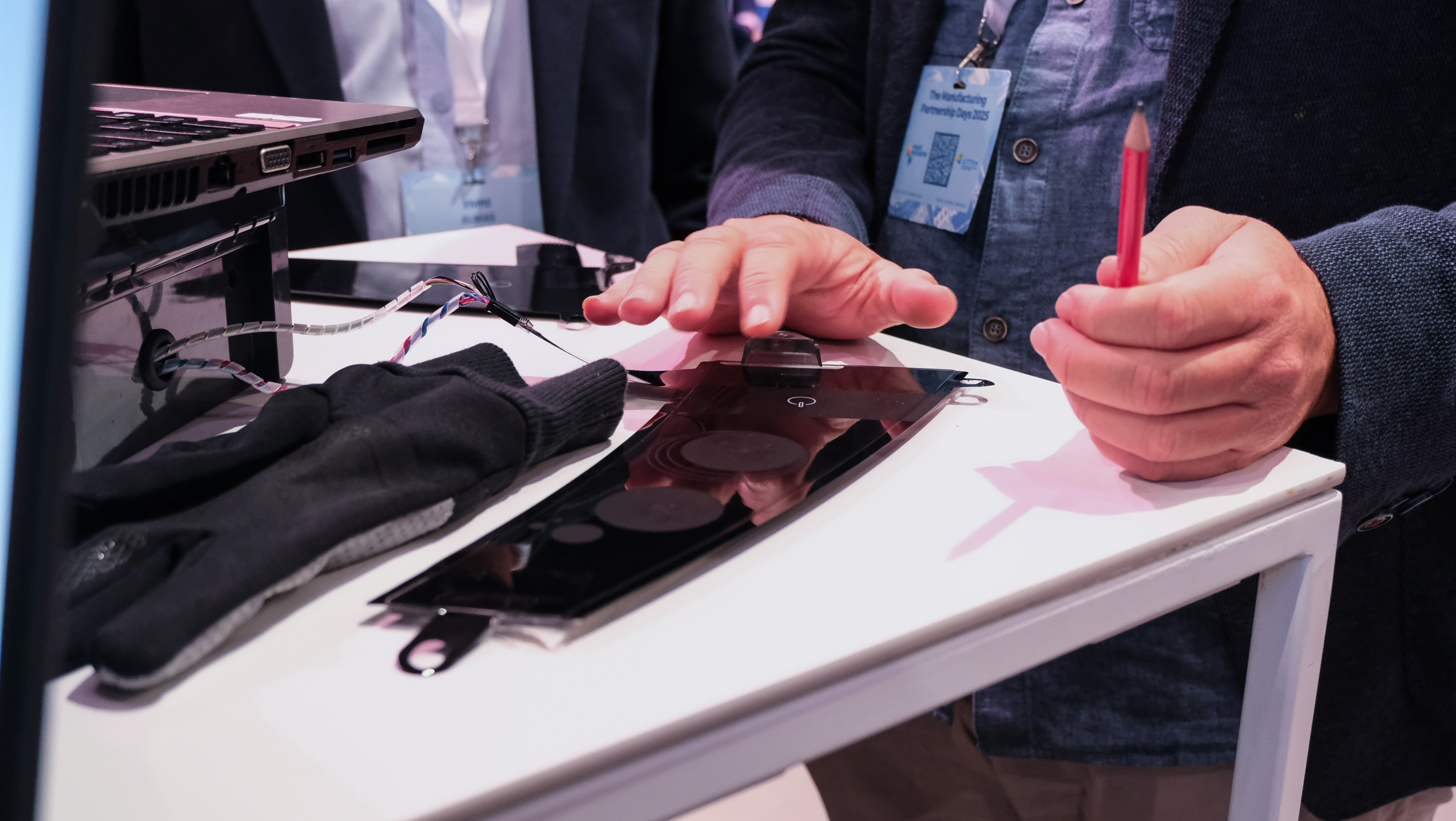
- Force-Sensitive Piezoelectric Technology: Replacing standard capacitive sensors to provide haptic feedback and reliable touch functionality when using gloves or in highly humid environments.
- 3D-Formed Flexible PCBs: Allowing for high integration and increased power density within complex geometries.
- Lightning Waveguides: Minimizing LED counts to improve processing efficiency and optimize heat distribution within the part.
- Functional Surfaces: Integration of micro- and nanostructured surfaces providing anti-bacterial, anti-icing, and easy-to-clean properties.
A Sovereign Path for European Manufacturing
The trajectory of the European injection moulding market is clear: future growth will be defined by the successful integration of advanced electronic functionality with sustainable, "first-time-right" manufacturing. By eliminating defects and reducing energy consumption through digital precision, the European industry can offset high operational costs and remain globally competitive.The innovations being developed by the MULTIMOLD project are essential for maintaining European sovereignty. By advancing the fabrication of complex electronic products into a single, high-yield injection moulding step, the region can effectively avoid dependency on low-wage Asian manufacturing of parts assembly. This synergy of institutional research and project-level innovation ensures that Europe remains at the forefront of the global transition toward high-tech, sustainable manufacturing.
.png)
.jpg)


.jpg)


